First Contacts-Europe
Rwanda was for
centuries ruled by a centralized monarchy of Tutsi kings that ruled by having
chiefs of different types: cattle, land and military. The king was highest in charge but the rest
of the peoples lived in harmony. In 1899,
Rwanda was made a German colony and during world war 1, 1919, Belgium took over
control. [1]
When the Germans
colonized Rwanda, the did not expressively change the social structure of the country,
but supported the king and existing hierarchy and passed on power to the local
chiefs. [2]
Belgium simplified
the power structure and they introduced education, health, public works and
agricultural supervision, also adding new crops and improving farming
techniques to help reduce famine. [3]
Both the Belgians and
Germans endorsed Tutsi authority.
Belgium, 1935 introduced identity cards labeling each person as either
Tutsi, Hutu, Twa or Naturalized. [4]
From 1959, the Tutsi
were a target, which Hutu’s killed thousands of Tutsi peoples and sending
almost two million into exile. The first
republic, under president Gregorie Kayibanda and the second, under president
Juvenal Habyarimana, institutionalized discrimination against the Tutsi and
subjected them to massacres over many different periods. [5]
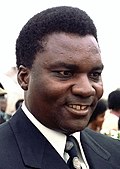
[6] Juvenal
Habyarimana
President of Rwanda
from 1973-1994
Pro-Hutu Belgians
held a vote in 1961, which Rwanda voted to eliminate the monarchy. Rwanda was thus separated from Burundi and
gained independence in the year 1962.
Juvenal Habyarimana took power in a military coup.[7]
In the previous
months prior to the coup, President Kayibanda had increased persecution of the
Tutsi’s by allowing vigilante Hutu groups to enforce ethnic quotas. When Habyarimana took power, it was largely
supported by urban population and indifference with rural communities. Habyarimana was a General in the Rwandan army
before he became president.[8]
Pro-Hutu
discrimination continued, but there was a higher economic gain and condensed amount
of violence against the Tutsi. In 1990,
a rebel group made up of mostly Tutsi refugees, called the Rwandan Patriotic
Front, (RPF), invaded north Rwanda and started the Rwandan Civil War. 1992, the war weakened Habyarimana’s power,
mass demonstrations of people forced him into a coalition and signing of the
Arusha Accords. [9]
The Rwandan government
and the Rwandan Patriotic Front met on August 4, 1993 to sign a set of accords
called the Arusha Accords, which would end the three year Civil war. The accords established what the people
thought would be considered necessary for lasting peace: rule of law, repatriation of refugees, and
the merging of government and rebel armies.[10]
April 6, 1994 on this
day the presidential airplane was shot down as it was flying towards the Kigali
airport. The plane held President Habyarimana
and the Burundian President Ntaryamira.
This assassination was the catalyst for the Rwandan Genocide. Both Hutu extremists and the RPF were under
suspicion for this airplane attack. [11]
Over the course of
100 days , the Rwandan Genocide, known as the genocide against the Tutsi,
500,000-1,000,000 Rwandans were killed. “from April 7 to mid-July 1994,[1] constituting as many as 70% of the
Tutsi and 20% of Rwanda's total population.”[12]

[13]
Human skulls at the NyamataGenocide Memorial
References


No comments:
Post a Comment