Natural Resources and Trade of Rwanda
90% of Rwanda
population is agriculture. This area is
land locked and has very few natural resources.
The main exports of Rwanda is tea and coffee. Coffee production of 14,578,560 tons in 2000
compares to a pre-civil war variation between 35,000 and 40,000 tons. By 2002
tea became Rwanda’s largest export, with export earnings from tea reaching
US$18 million equating to 15,000 tons of dried tea.[1]
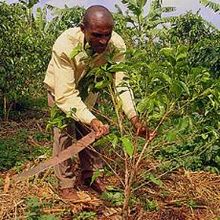 [2]Rwandan cultivating coffee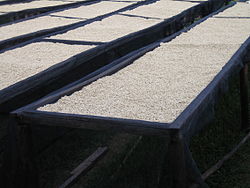
[3]coffee
beans drying, Rwanda’s main cash crop
In 2004, mining and
quarrying accounted for less than 1% of Rwanda's gross domestic product (GDP).[4]
Mining for minerals
in Rwanda include; tin ore, tungsten ore, cement, and columbite-tantalite ore. They also produce natural gas and use lava
beds for fertilizer. Rwanda’s mineral
industry consisted mostly of small companies or individual miners. Exploitation of the
country's peat deposits could become necessary to meet the subsistence farming
sector's energy needs, Rwanda's deforestation rate being the third highest in
Africa. [5]
Rwanda uses mostly hydroelectric power. Most of the country’s power comes from four
hydroelectric stations.[6]
Most industrial activity centers around food
processing. Manufacturing and processing establishments have been at the
artisan level, turning out items such as pottery, wicker baskets, bricks,
shoes, tile, and insecticide. Rwanda has light industry which produces sugar,
coffee, tea, flour, cigars, beer, wine, soft drinks, metal products, and
assembled radios. Rwanda also has textile mills, soap factories, auto repair
shops, a match factory, a pyrethrum refinery, and plants for producing paint,
cement, pharmaceuticals, and furniture. War in 1994 severely disturbed
industry. As of 2001, only 40% of prewar industries had restarted operations.
There are abundant natural gas reserves in Lake Kivu, which Rwanda shares with
the Democratic Republic of the Congo. Rwanda has expressed interest in
exploiting those reserves, and in 2000, the country planned to build an inland methane
gas plant.[7]
Rwanda's main
commodity exports are coffee (56%) and tea (27%). Other exports include gold
(17%) and animal hides and skins (0.9%).[8]
References

No comments:
Post a Comment